Packaging helps us deliver high-quality products to our customers. It also requires large amounts of raw materials, energy, water and effective waste management. The ALDI SÜD Group wants to take responsibility and drive change: Reducing packaging material can help limit packaging waste.
As a retailer with a high proportion of private label products, ALDI can influence the design and composition across our product range. We constantly work with our business partners to optimise our packaging wherever possible. Often, simple measures can have a big impact: Avoiding oversized or unnecessary packaging materials and components, such as shrink wraps or plastic lids, can save hundreds of tonnes of packaging material each year.
Why is it important to improve our packaging?
Packaging is an essential part of our daily lives. It ensures product quality and safety, protects products during transport and provides consumer information. The demand for sustainable packaging continues to grow, challenging us as a retailer and the industry as a whole.
We work closely with our buying departments, suppliers and external partners throughout the supply chain to optimise our current packaging and explore new solutions. The ALDI SÜD Group has set ambitious targets to reduce material use, increase recyclability and incorporate recycled content.
What have we done so far?
In 2023, the ALDI SÜD Group achieved an important milestone by reducing the private label packaging material relative to sales by 17% (baseline 2020)*. As we continue to look for ways to reduce our private label packaging, this progress is expected to even improve in the coming years.
* Figure includes an inflation adjustment, as the KPI is calculated relative to sales. This ensures that the reported result reflects genuine progress in reducing packaging material use rather than changes driven by inflation.
Some examples of projects already successfully implemented in our ALDI stores are:
- Redesigning and harmonising the design of dishwasher liquid bottles across European markets, saving 108 tonnes of plastic per year
- Elimination of plastic shopping bags in the US, saving approximately 4,400 tonnes of plastic per year
- ALDI Australia replaced non-recyclable PVC plastic with fabric packaging made from production waste, reducing plastic packaging across the range by 75%
New projects have started in 2024 and will be extended to more ALDI markets in 2025.
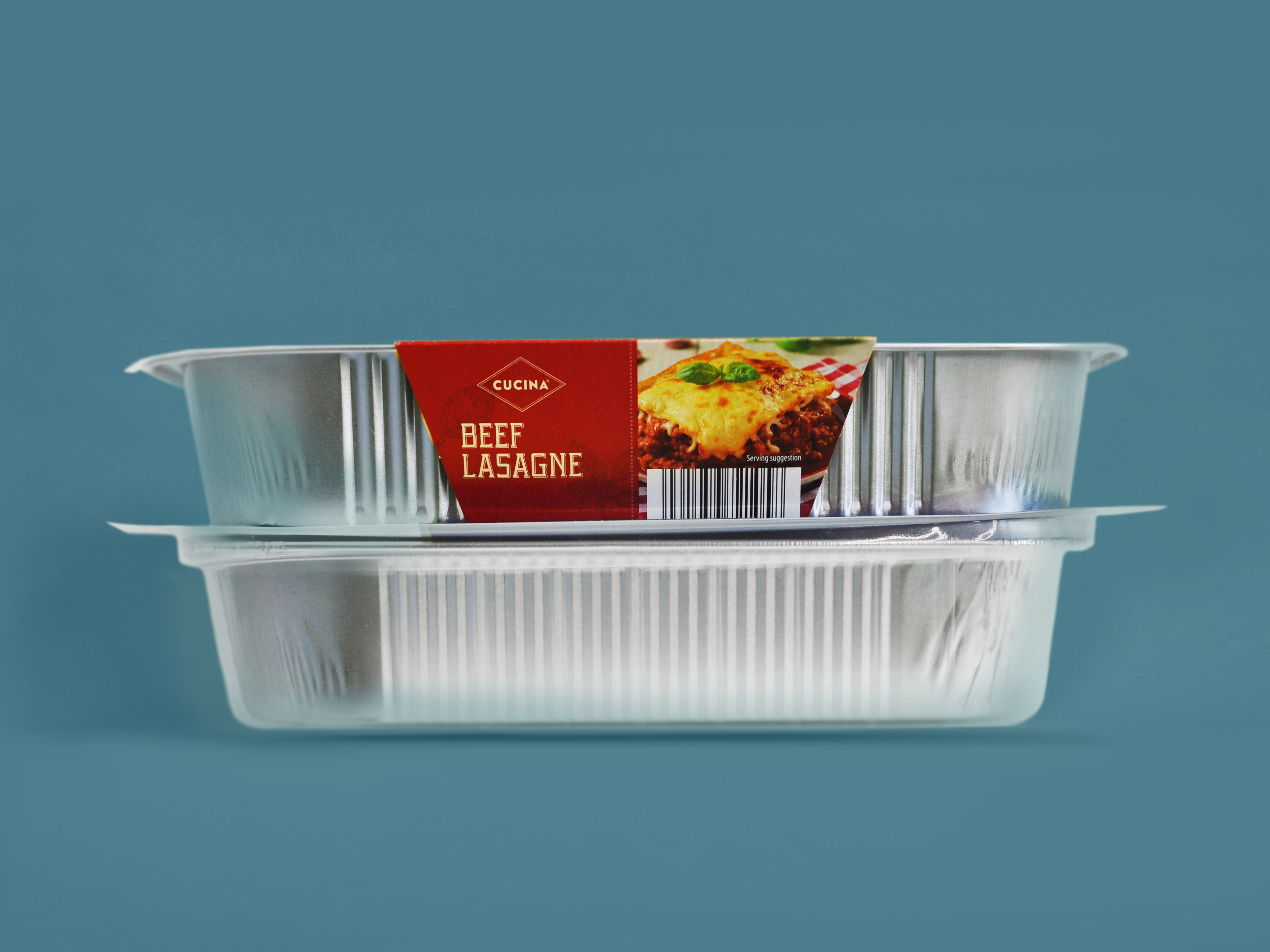
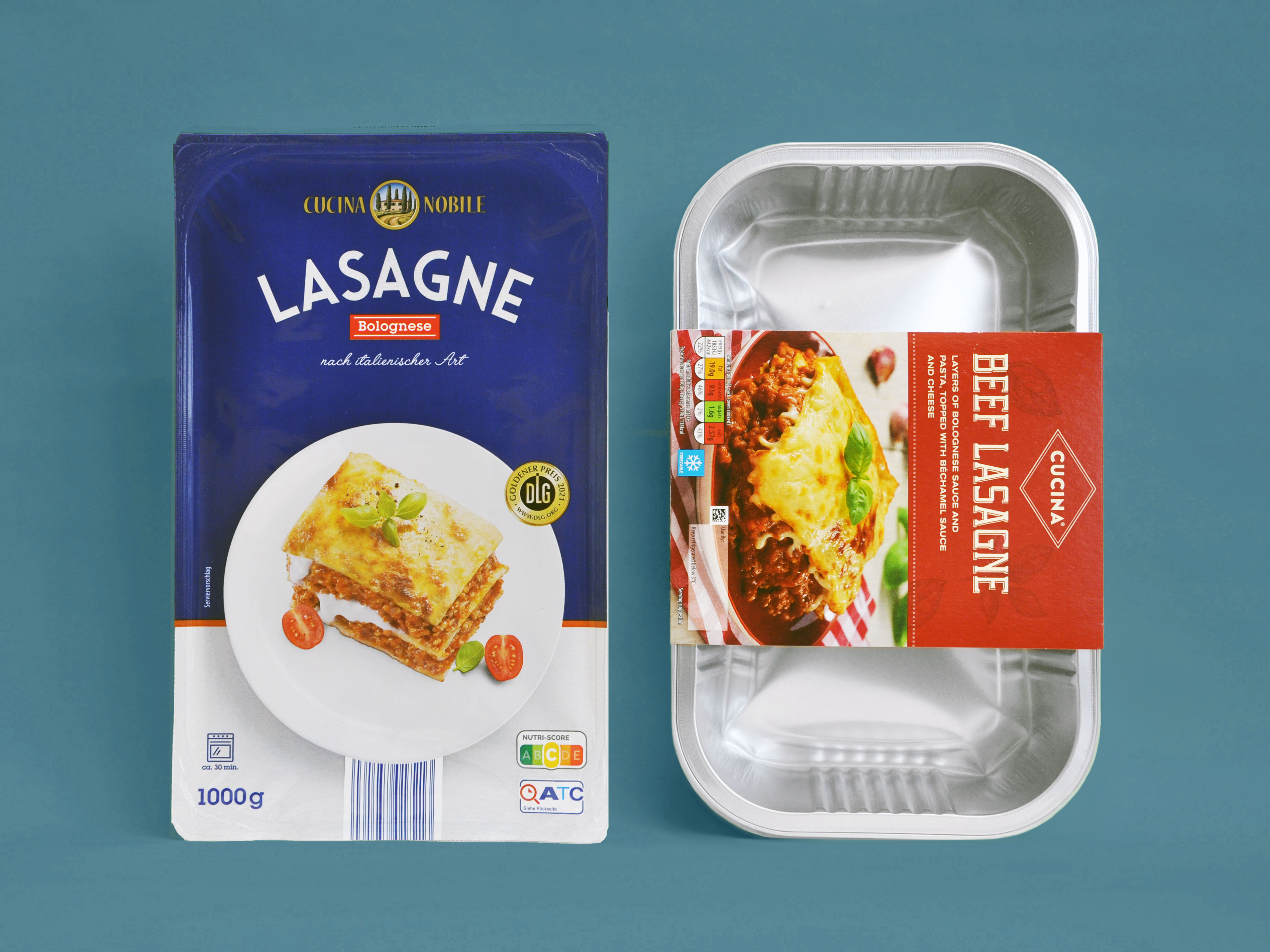
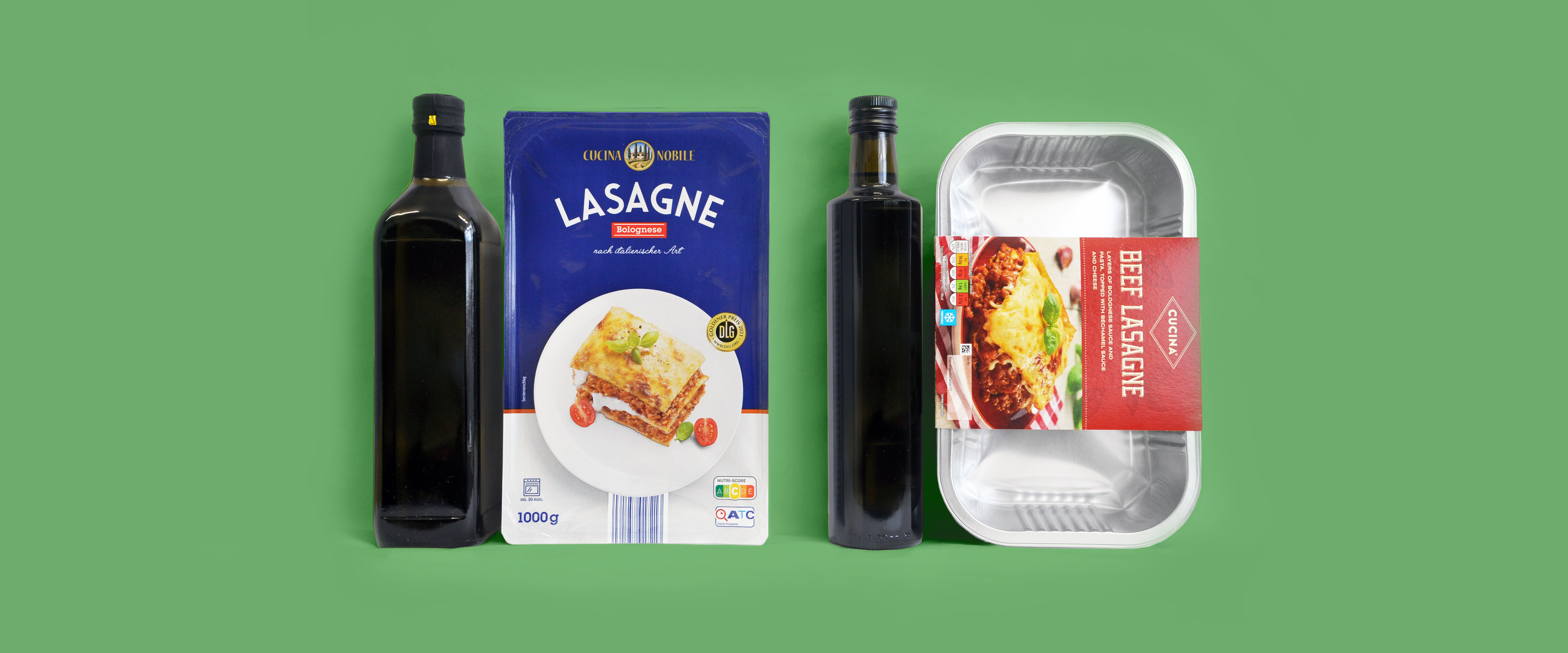
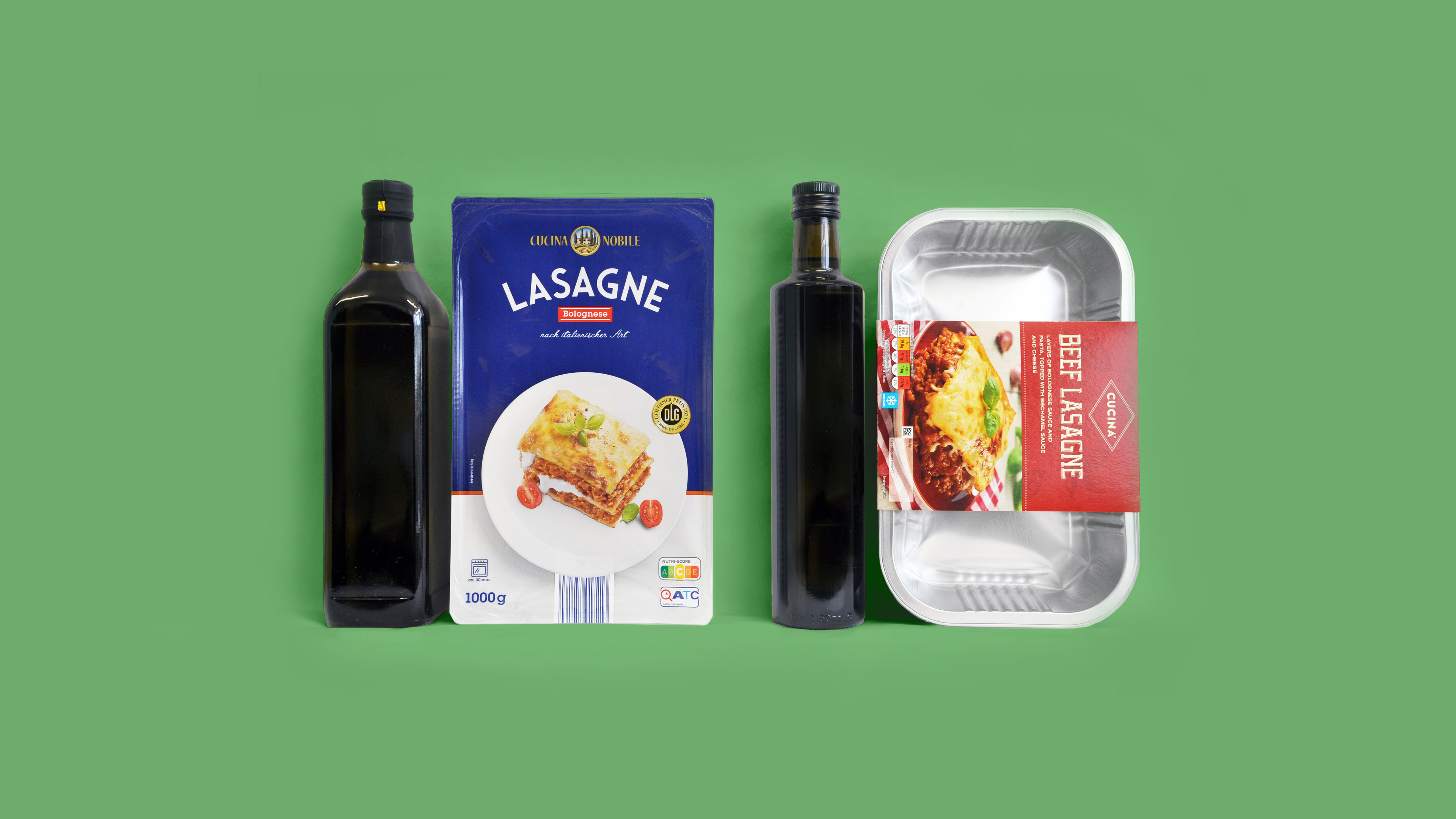
A new, slimmer format for our ALDI lasagne
Harmonising our packaging designs across several ALDI markets opens up new opportunities to implement better packaging on a larger scale. By standardising best practice solutions, we can increase our sustainability efforts. Several projects have started in 2024 and will be extended to more ALDI markets in 2025.
By eliminating the bottom plastic cover, we expect to save about 74 tonnes of plastic per year. The plan is to harmonise and standardise this packaging across the business.
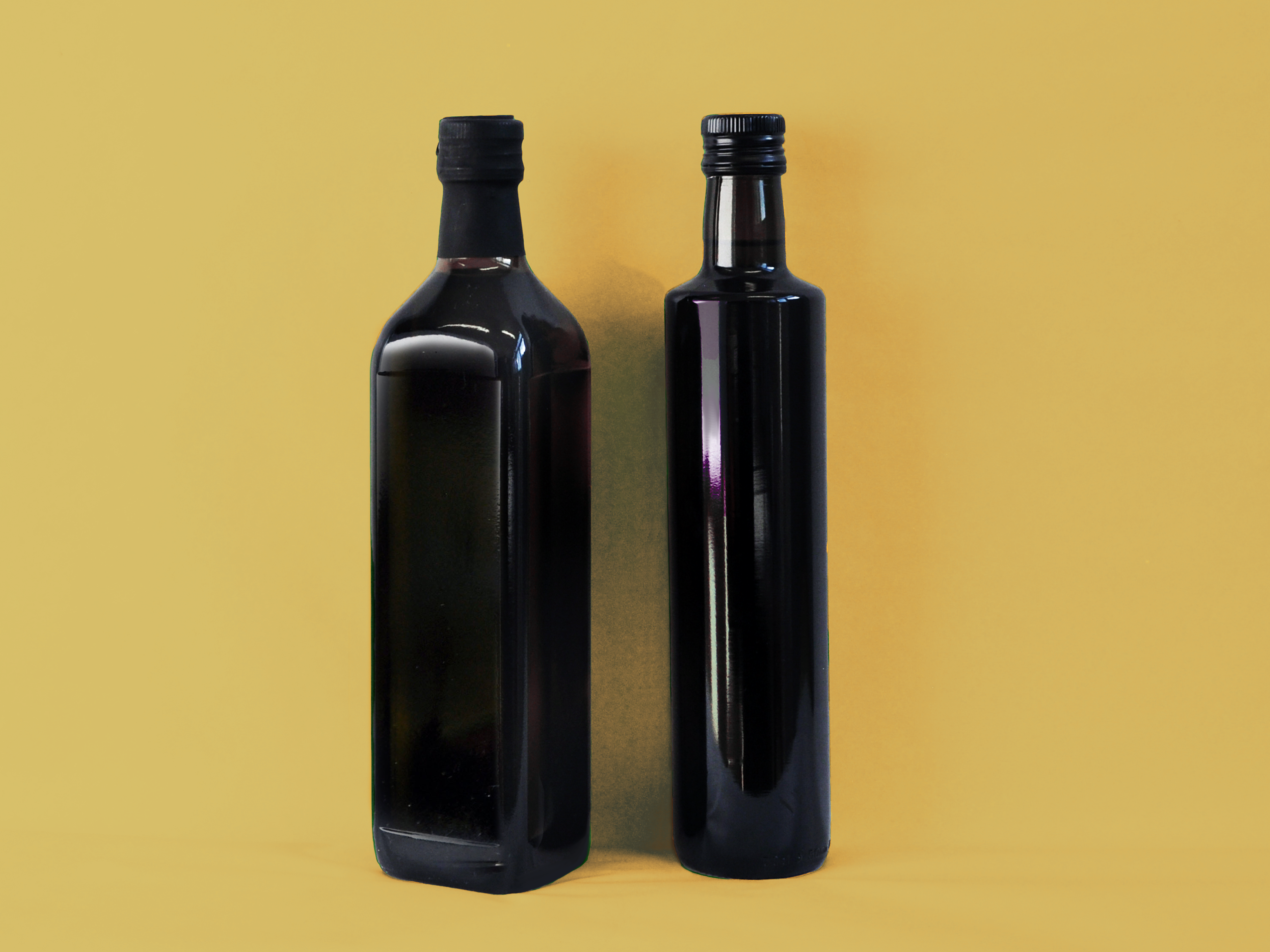
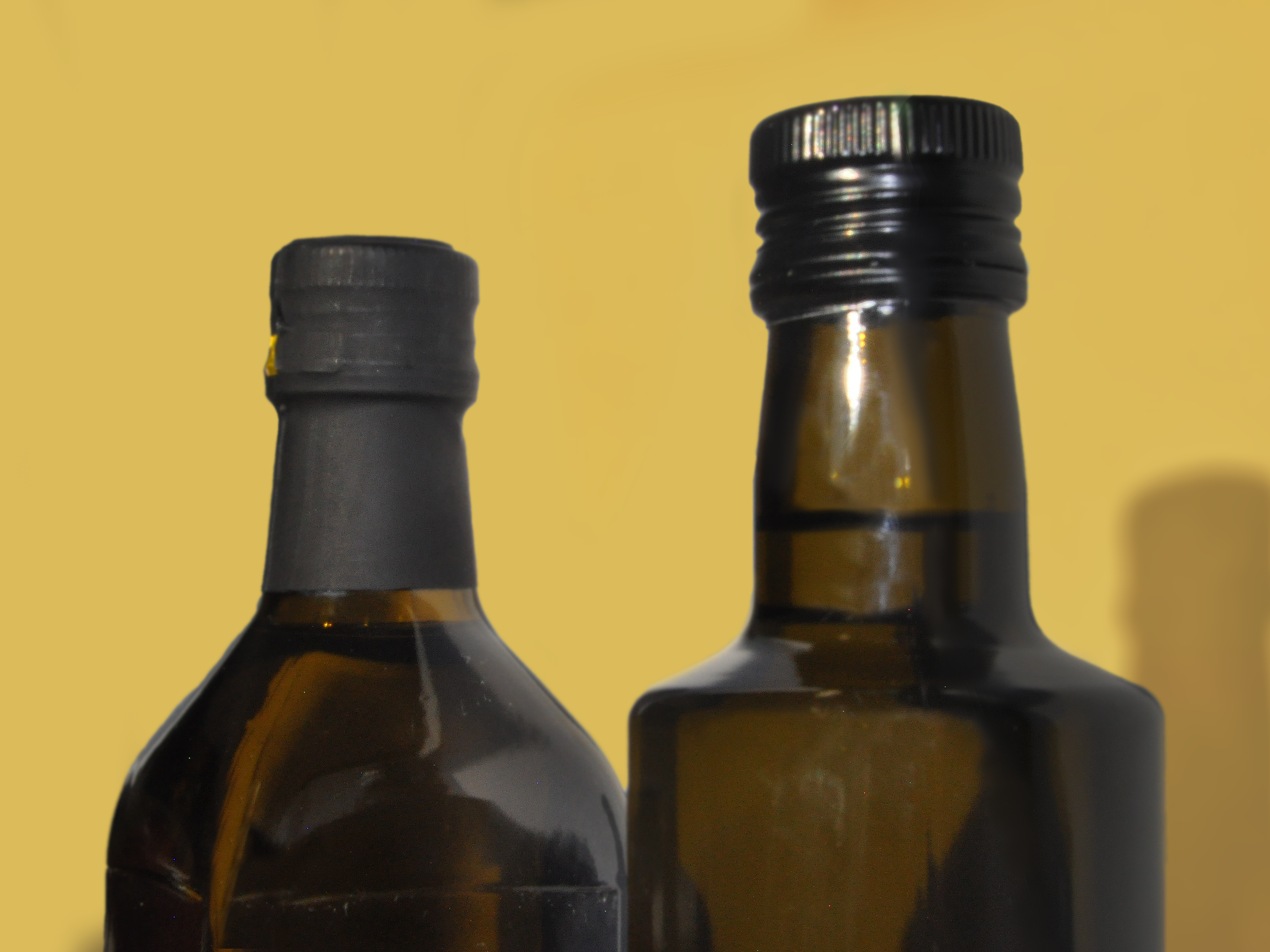
No more plastic overcaps on our olive, rapeseed, and sunflower oil bottles
Plastic overcaps are often used to protect bottle tops. These sleeves cover the cap and tighten around the bottle top when heated. Considering that these components end up in the bin after the bottle is opened. Following an assessment of their function, we identified an opportunity to remove them and reduce the amount of plastic used.
ALDI US has already stocked the private label olive oil bottles without shrink caps on their shelves since 2024. ALDI SÜD Germany and HOFER Austria are currently phasing out existing stocks and introducing the new design. This will save around 10 tonnes of plastic packaging per year.
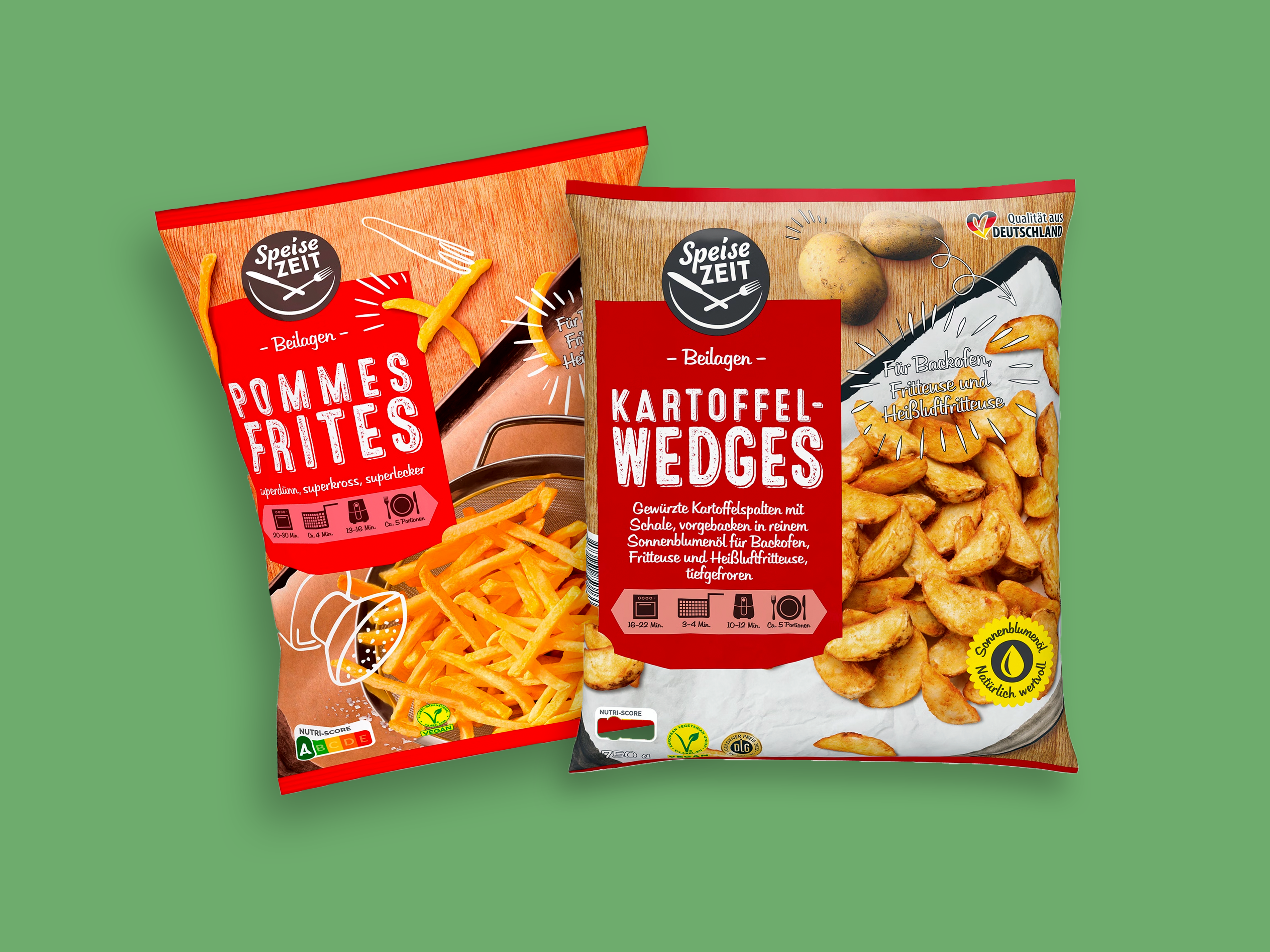
How thick do our frozen product bags need to be?
After carrying out numerous tests with our suppliers, it was determined that a material reduction is possible without compromising the quality of the product. Means in this case: Using less packaging material for our frozen food bags has no effect on product quality, but it does reduce the amount of plastic used. By switching to a thinner material, an estimated 114 tonnes of plastic can be saved each year.
Frozen potato and vegetable products with the new packaging have been sold in ALDI SÜD stores in Germany and HOFER stores in Austria since 2024, following a successful implementation in the UK. We plan on standardising this packaging for all our ALDI markets.
Optimising packaging and its impact
Harmonising our packaging designs across several ALDI markets can help us apply packaging material reductions to a larger number of products. By standardising best practice solutions, we can extend our sustainable packaging efforts.
Find out more about our standards, initiatives, and projects for sustainable packaging in our Packaging Factsheet and our International Recyclability Guidelines.